NZFX - Phoenix Field
Positions
| Position Name | Shortcode | Callsign | Frequency | Login ID | Usage |
|---|---|---|---|---|---|
| Williams TMA | WTMA | Williams Approach | 126.200 | NZWD_APP | Primary |
Event Only Positions
Important
The following are designated as Event Only positions, and may only be staffed during a VATNZ event where approved, or if explicitly authorised by the Operations Director.
| Position Name | Shortcode | Callsign | Frequency | Login ID | Usage |
|---|---|---|---|---|---|
| Phoenix DLV | DFX | Phoenix Delivery | 128.600 | NZFX_DEL | Event Only |
| Phoenix SMC | GFX | Phoenix Ground | 121.800 | NZFX_GND | Event Only |
| Phoenix ADC | TFX | Phoenix Field Tower | 118.200 | NZFX_TWR | Event Only |
Event only aerodrome positions
The NZFX local aerodrome positions are event only positions and should only be opened when they are published for an event or otherwise approved.
NZWD_APP is not event only. It provides the overlying approach service for the wider Williams Field terminal area and will be covered in the separate NZWD airport/TMA SOP.
Responsibilities
Phoenix Field Tower is responsible for aircraft operating within the Phoenix Field Class D airspace. This includes aerodrome control, traffic information, IFR departure instructions, VFR operations, and local non-radar arrival/departure services when delegated or required.
Phoenix Field Tower may also provide a non-radar approach service to aircraft operating in the surrounding Class E airspace when NZWD_APP is not online or where coordinated with the overlying controller.
Airspace
Class D
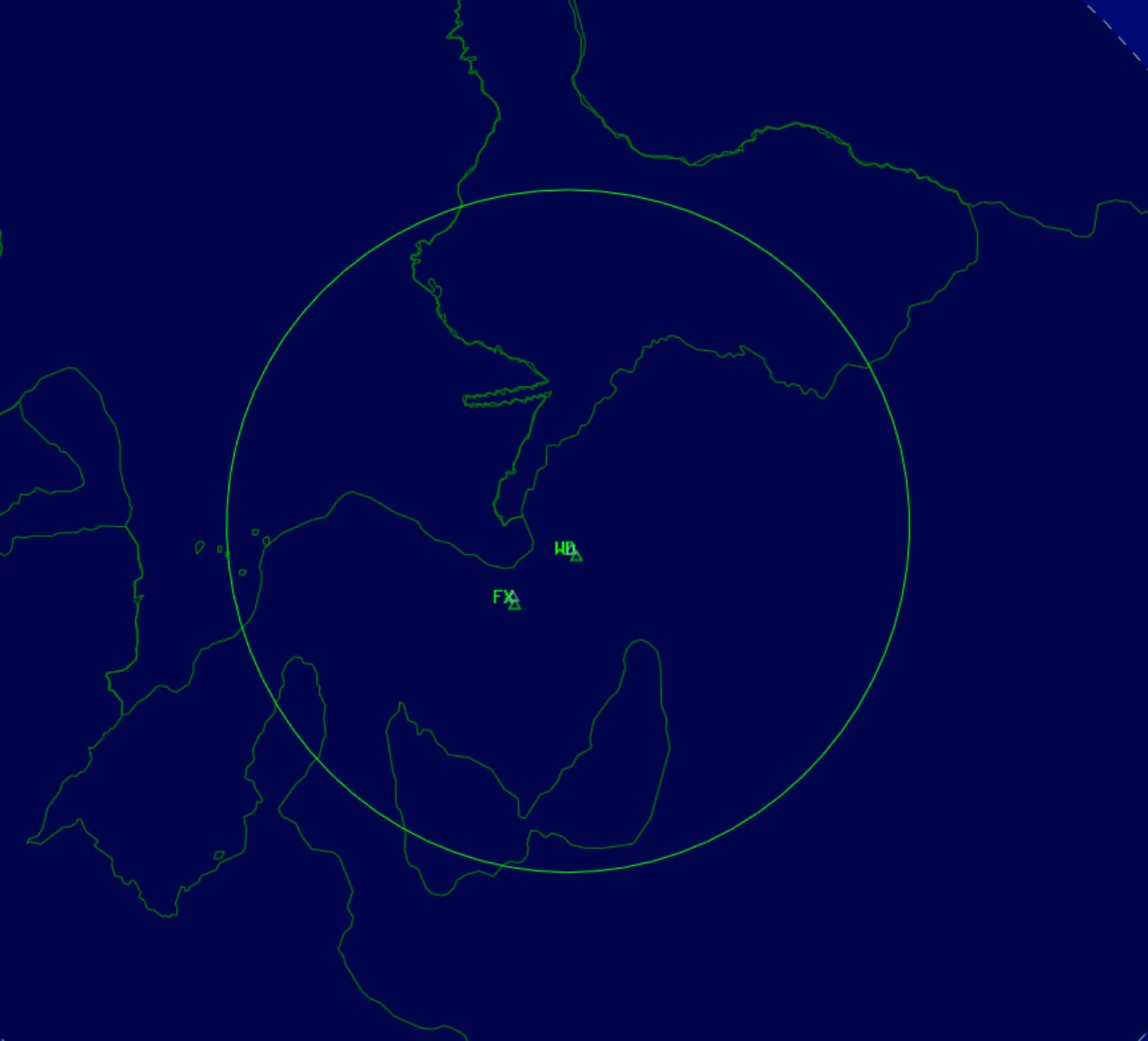
Phoenix Field has Class D airspace within a 4.3 NM radius of the aerodrome, from the surface up to and including A025 AGL.
Aircraft must establish two-way radio communications with Phoenix Field Tower before entering the Class D airspace.
Class E
The surrounding Class E airspace extends within 100 NM of the Williams Field or Pegasus Field TACANs, excluding Class D airspace, from the surface up to but not including FL245.
Within Class E airspace:
- IFR aircraft are separated from other IFR aircraft.
- IFR aircraft receive traffic information about VFR aircraft as far as practicable.
- VFR aircraft may receive flight following on request, workload permitting.
- Hazard alerts should be passed to known VFR aircraft.
VFR aircraft do not require a clearance to enter Class E airspace, but should monitor the appropriate frequency, avoid published IFR routes and holding patterns where possible, and make broadcasts when required to avoid conflict.
Clearances
IFR clearances should be issued using FAA phraseology or standard VATNZ IFR phraseology. VFR phraseology should remain in line with standard VATNZ practice.
IFR Departures
IFR aircraft will call for clearance before departure. Tower, or Delivery when staffed during an event, shall relay the IFR clearance and issue departure instructions.
FAA-style IFR clearances may include:
- Destination airport.
- Assigned SID, if applicable.
- Route, such as
THEN AS FILEDorAS FILED. - Initial altitude or
CLIMB VIA SID, as applicable. - Additional instructions or information where required.
If no SID is assigned, clear the aircraft to destination as filed and assign the appropriate initial altitude.
VFR Departures
VFR aircraft shall be issued appropriate VFR departure information. Plain language instructions may be used where they are clear and unambiguous.
Ground Movements
Ground movements are normally straightforward and should be managed by Tower unless NZFX_GND is staffed during an event.
Aircraft should obtain start clearance before taxi when operating IFR. Departing aircraft should be taxied to the active runway holding point and transferred to Tower when ready, or instructed to monitor Tower before reaching the holding point during high traffic events.
Tower
Departures
Tower is responsible for sequencing departures and ensuring the departure path is clear before issuing takeoff clearance.
For IFR departures, ensure the aircraft has received its IFR clearance and departure instructions before takeoff. Transfer IFR departures to NZWD_APP, or to NZCM_FSS/UNICOM if no relevant overlying controller is online.
Arrivals
Arriving aircraft should normally contact Phoenix Field Tower no closer than 10 NM from the aerodrome for landing instructions, unless otherwise coordinated.
Aircraft operating in the Class D airspace should remain at or above A010 AGL, or A005 AGL for helicopters, until commencing final descent.
Coordination
NZFX_TWR to NZWD_APP
Coordinate IFR departure releases, arrival sequencing, visual approaches, and any aircraft requiring a non-standard operation with NZWD_APP.
Departing IFR aircraft should be transferred to NZWD_APP once airborne and clear of immediate aerodrome traffic, unless otherwise coordinated.
NZFX_TWR to NZCM_FSS
When NZWD_APP is not online and NZCM_FSS is providing the overlying service, coordinate IFR arrivals and departures with Mac Center.